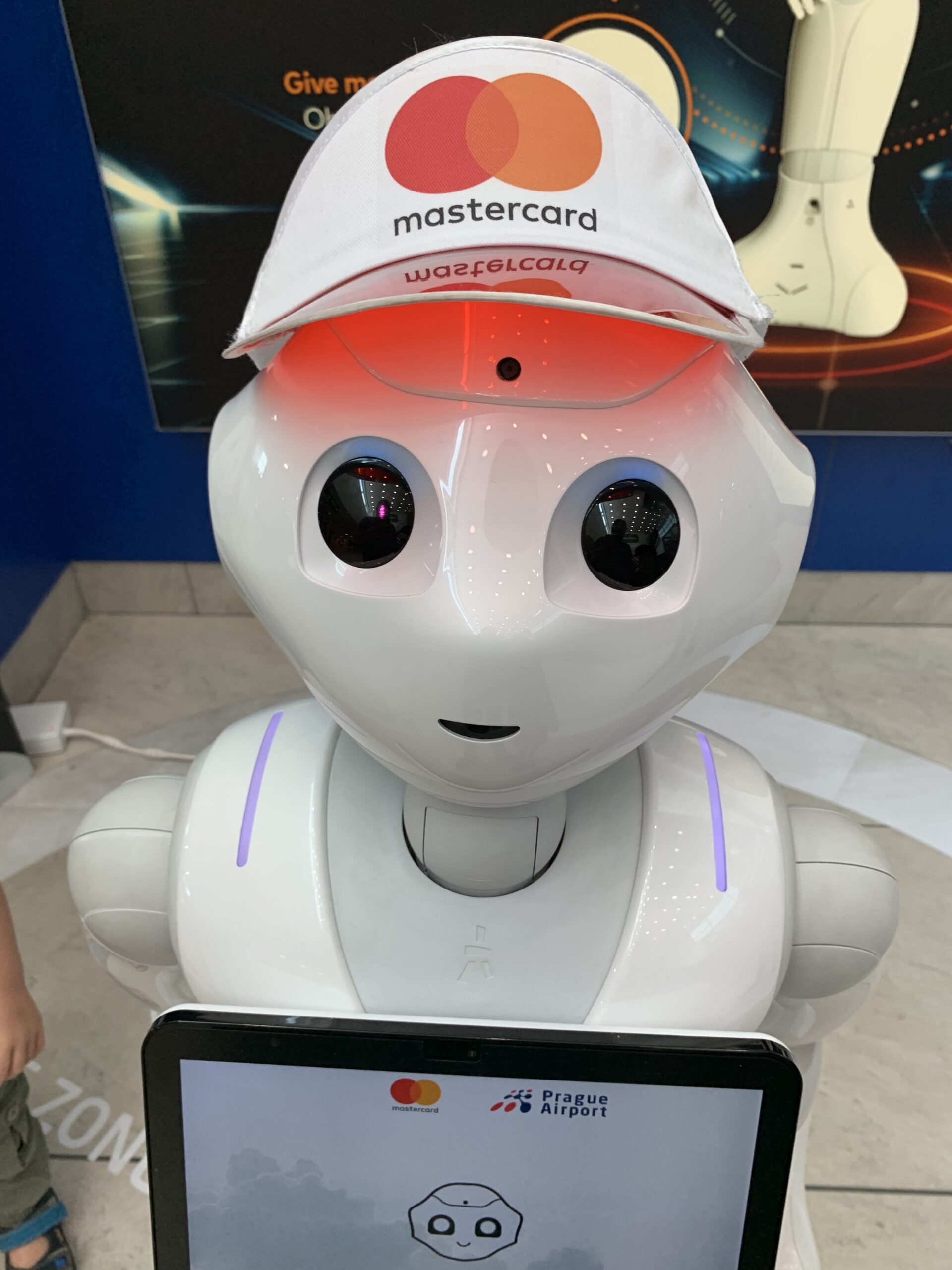











San Francisco startup Instinct announced on September 28 that it has raised $1 billion in Series C funding at a $10 billion valuation, with Sequoia Capital, Benchmark and Coatue backing the round. The money is going toward a personal AI agent that does something most assistants still can’t: finish the job.
Instinct’s pitch is simple to describe and hard to build. Instead of answering a question and handing the work back to you, the agent takes the task and runs with it. You text it or call it, and it uses its own phone and its own computer to get things done — planning a cross-country road trip, ordering the weekly groceries, cancelling a subscription you forgot about, or sitting on hold with customer service so you don’t have to.
What Instinct actually does
The product has no mobile app. It runs over text messaging and phone calls, with its own phone number. On its website, the company describes an assistant that connects to a user’s email, messaging, screen, audio and location, then operates a phone and computer the way a person would: clicking, typing, dialing, waiting.
Recent product updates flesh out the idea:
- Instinct Concierge, a white-glove service for high-touch cases — securing reservations at restaurants that don’t take online bookings, joining a dentist’s cancellation list, resolving billing disputes.
- Trusted Person Network, which lets one user’s Instinct agent talk directly to another user’s agent through an Instinct-to-Instinct protocol, coordinating schedules or plans without the humans relaying messages. Agents can also share files — PDFs, images, spreadsheets — with each other.
The distinction matters. Most consumer AI products answer questions. An agent that holds its own accounts and devices can complete multi-step tasks across the messy real world — which also means it needs far more trust from the person it works for.
The money and the math
The headline numbers are striking on their own, but the trajectory is the real story. About a month before the Series C, Instinct closed a round of roughly $350 million that valued the company at $2.5 billion. The new round quadruples that valuation in a single funding cycle.
That kind of step-up usually comes with metrics attached: revenue, users, retention. Instinct has disclosed none of them. The product launched invite-only in August 2026 and remains in early access. What investors bought is a bet on the category — agents that act rather than chat — and on the founder.
Founder Noah Shinn came to Instinct from a research scientist role at Sierra, with machine-learning and programming-language research at Northeastern and MIT behind him. As a Northeastern student he co-developed Reflexion, a framework that has a language model check its own output and use the feedback to improve subsequent attempts. Northeastern reported the method reached 91% accuracy on the HumanEval coding benchmark — 11 percentage points above the result then attributed to GPT-4. It’s a useful clue to how Shinn thinks: getting an AI to attempt a task is one problem; getting it to notice and recover from its own mistakes is another. For an agent that books your flights, the second problem is the whole business.
Why investors are paying $10 billion for an invite-only product
Three forces are converging. First, the models got good enough at tool use that “do it for me” demos actually work in controlled settings. Second, the biggest consumer AI companies are all racing toward the same territory — assistants that act across apps — which makes an independent, well-funded contender strategically interesting. Third, the personal-agent category has no clear winner yet, and the prize for whoever cracks reliability is enormous: whoever you trust to handle your calendar, money and messages owns the most intimate layer of computing.
Reuters, which first reported the round, did not identify a lead investor. The company itself said little beyond founder Noah Shinn’s statement: “We’re building Instinct to be the best personal agent that can handle the deeply personal nuances of everyday life. This funding helps us bring Instinct to more people and continue building the future of personal AI.”
The hard parts nobody has solved yet
A $10 billion valuation doesn’t make the failure modes go away. An agent with your email, location and payment access is a spectacular target — for prompt-injection attacks, for social engineering, for the ordinary chaos of misheard instructions. Every agent company faces the same trust equation: each task the agent completes correctly builds trust, and a single expensive mistake can erase it.
There’s also the economics question. Running an agent that drives a real browser, makes real phone calls and waits on hold burns far more compute than answering a chat message. Whether that cost curve bends down fast enough for a consumer subscription to work is still an open bet.
And the competitive field is brutal. The same week Instinct closed its round, the industry was still digesting how quickly frontier labs are shipping agentic features into products with hundreds of millions of users. Instinct’s answer is focus: one product, one job, done better than anyone. With a billion fresh dollars, it now has the runway to prove that focus is worth $10 billion — or to learn, expensively, what it’s not. The agents will need the chips to run on, and AMD’s trillion-dollar run on AI accelerator orders shows where that compute is coming from.
The competition isn’t standing still
Instinct’s timing is both perfect and perilous. Perfect, because the models finally handle multi-step tool use well enough that agent demos work. Perilous, because every frontier lab and platform owner is racing toward the same prize. The difference between a chatbot and an agent is now the most contested territory in consumer AI — and the companies with hundreds of millions of existing users can ship an agent feature overnight.
Instinct’s counterargument is focus. A general-purpose assistant has to be good at everything; a personal agent has to be exceptional at the few dozen tasks that make up daily life — the dentist appointments, the billing disputes, the trip logistics. Those tasks share a property: they’re annoying precisely because they require persistence across phone calls, websites and waiting. An agent that does its own waiting has a structural advantage over one that asks you to wait.
The trust equation
There’s a reason the product launched invite-only. Every agent company is learning the same lesson: trust compounds slowly and evaporates instantly. One correctly handled billing dispute earns a user for a year; one accidentally cancelled flight loses them forever — which is why even frontier labs are raising their own misalignment risk ratings. Instinct’s $1 billion buys the engineering time to get the failure rate down before the spotlight — and the adversaries — arrive in force.
Featured image: Nenad Stojković via Wikimedia Commons (CC BY 2.0)