Most AI models sit behind a prompt box: you type something in, you get something out. Odyssey’s Odyssey-3 flips that around. The California startup has opened a public research preview of its “world model” — software that generates an interactive environment from a text prompt and then keeps simulating it, frame by frame, as you move through it. The free online demo, powered by a lighter variant called Odyssey-3 Flash, lets anyone type a description, then walk around the resulting world in first- or third-person view, trigger events, and watch the simulation react in real time. Developers can also apply for API access.
Not a video generator
It is easy to mistake a world model for a video generator, but the two do different jobs. Video models — like Kling 4.0, which is in early access — produce a fixed clip from a prompt. A world model like Odyssey-3 instead keeps generating: every new frame is predicted from the previous frames plus whatever action the user just took. The scene persists, responds, and stays consistent as you interact with it.
Under the hood, Odyssey-3 is an autoregressive diffusion transformer trained to simulate a wide range of scenarios rather than any one task. Odyssey says the model picks up physics, dynamics, cause and effect, and even human behavior from visual observations during pretraining.
The training data is a mix of internet videos annotated with event descriptions, video game footage paired with the corresponding keyboard and mouse inputs, and simulated physical interactions. A dedicated training technique cuts down the number of compute steps per frame, which is what makes real-time generation possible on consumer-grade infrastructure.
The base model has 14 billion parameters and outputs video at 832 by 480 pixels; the more capable Odyssey-3 Pro runs at 1280 by 720. Those are modest numbers by frontier-model standards — deliberately so, since the company is optimizing for speed and interactivity, not pixel count.
The benchmark numbers come with footnotes
Odyssey reports a top score of 66.1 points for Odyssey-3 Pro on the video-to-video track of Physics-IQ Verified, a benchmark that tests physical behavior — fluid mechanics, optics, solid mechanics, magnetism, thermodynamics — by asking models to continue videos of real experiments and comparing outputs against actual outcomes.
That number deserves scrutiny. The 66.1 came from a single test run using a selection method that picked one of eight generated videos per task — which does not satisfy the benchmark’s rules for record claims, since those require four test runs with standard deviation reported. Without the selection step, Odyssey-3 Pro averaged 63.37 points across four runs. Both figures sit on the official leaderboard; both were submitted by Odyssey itself.
On the WorldMark benchmark — which tests how well generated worlds follow control instructions, how good they look, and whether they stay consistent over time — Odyssey-3 ranked first in three of four categories based on the company’s own evaluation: First-Person Stylized at 77.2, Third-Person Real at 79.0, and Third-Person Stylized at 76.3, placing third in First-Person Real with 80.6. The takeaway is not that Odyssey-3 is provably the best world model in existence; it is that the company is publishing detailed numbers with their methodology attached, at a moment when most labs drip-feed capabilities behind API walls.
One model, five different machines
The preview’s most interesting claim is not about rendering worlds at all. It is about what happens when you freeze the pretrained model and bolt a small, task-specific “action decoder” onto it — a component that translates the world model’s internal representations into the control signals a particular machine needs.
Because the general knowledge already lives in the backbone, each new body needs surprisingly little task-specific training data:
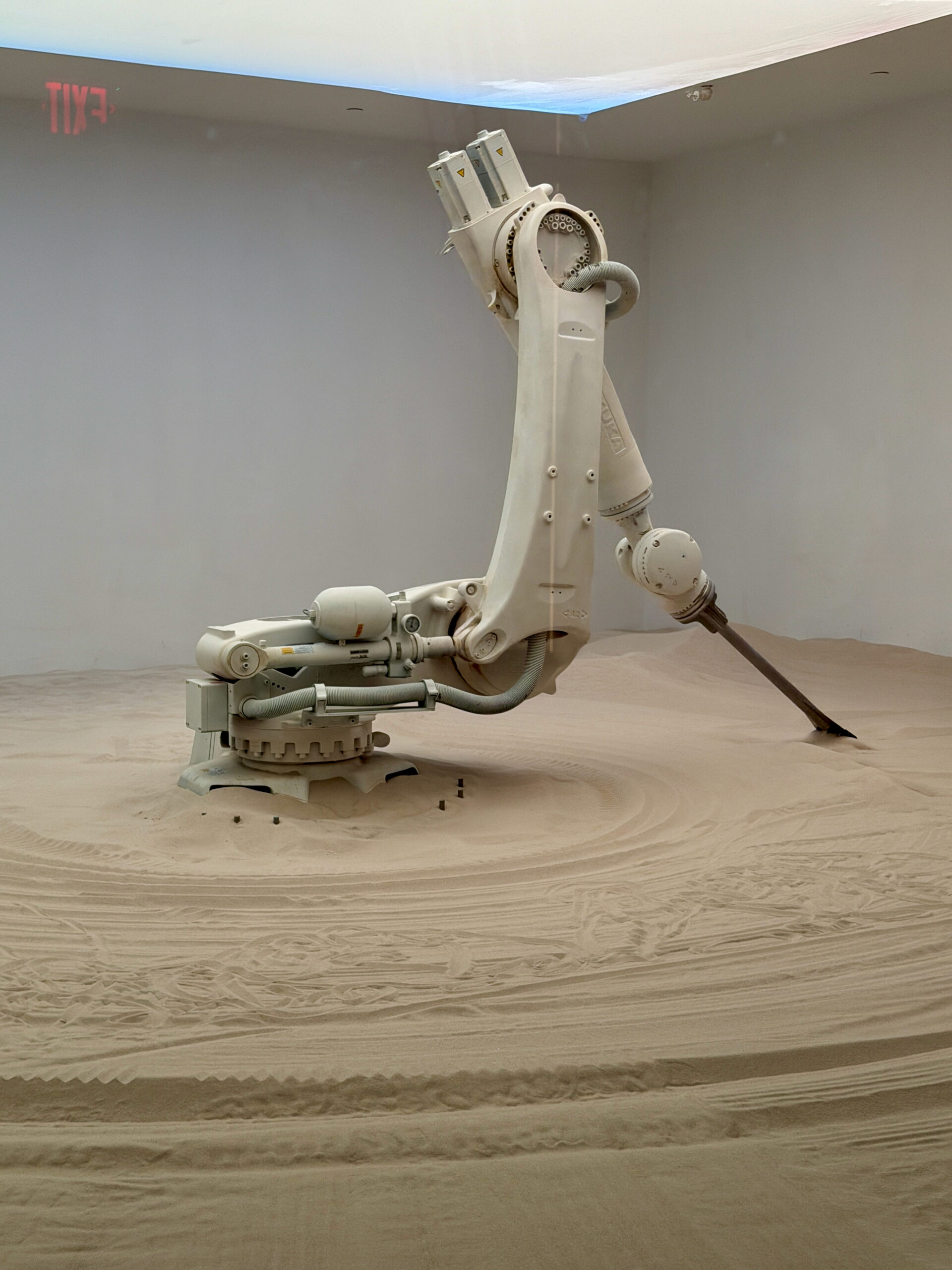
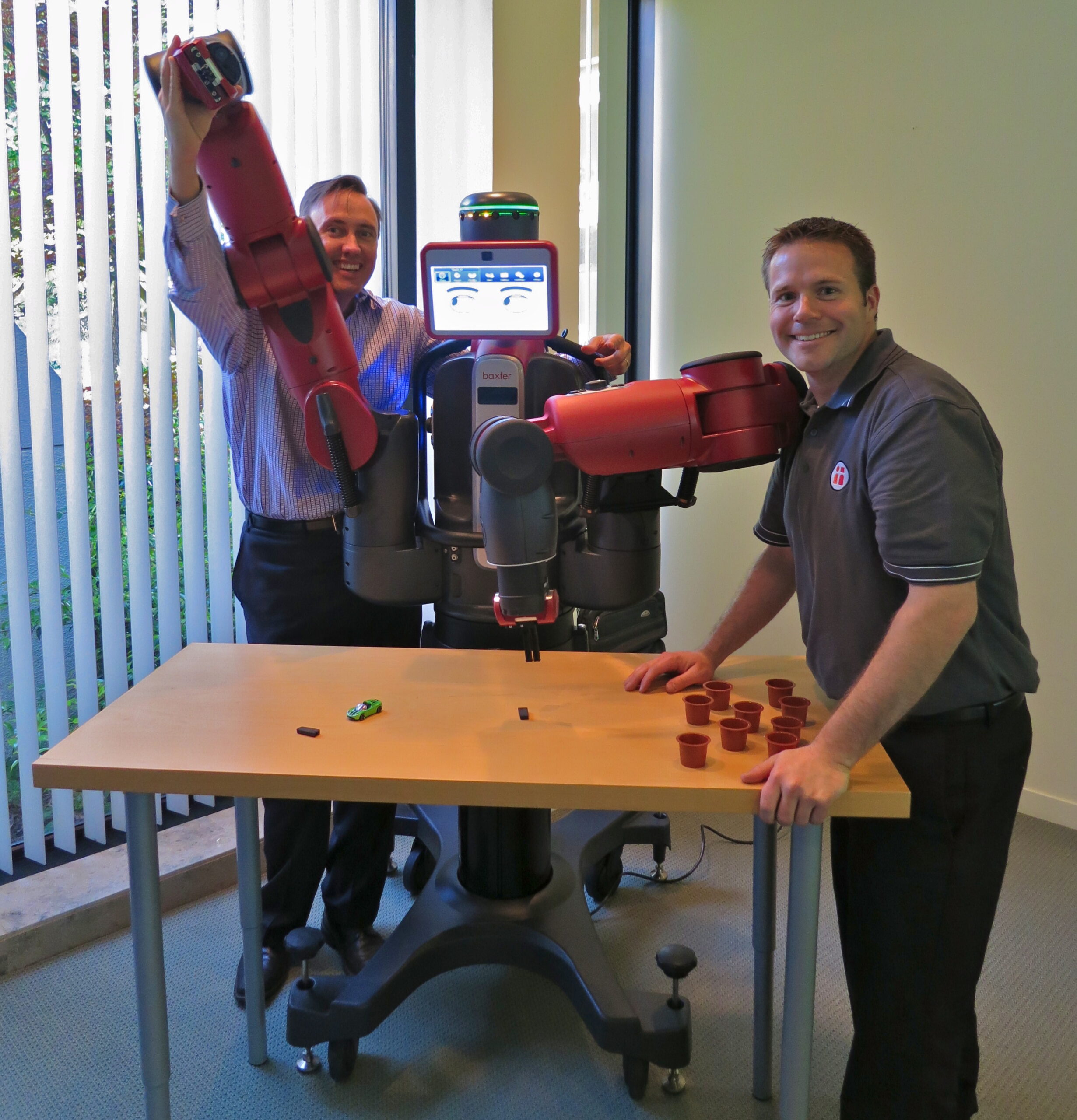
- Robotic arms. An Odyssey-3-based system controlled multiple robot arms after training on a few dozen hours of demonstration data. The arms could also recover from failed grasps on their own — situations that were not in the training data.
- Humanoids. Odyssey is working with Swiss robotics company Flexion on humanoid robot controllers built on Odyssey-3, which the company says perform more reliably than comparison models even when conditions change.
- Drones. A controller trained on simulated flight data flew a drone in a virtual indoor environment, dodging obstacles and flying to commanded targets.
- Video games. The company showed an AI autonomously playing Grand Theft Auto V — steering vehicles, fighting enemies. A controller trained on roughly two hours of GTA footage then transferred its skills to Red Dead Redemption 2 without extra training, moving a character on horseback.
That last demo is the closest thing to the classic promise of world models: learn how the world works once, then adapt cheaply to anything. Two hours of driving-and-shooting footage turning into competent horseback riding is a striking illustration.
Odyssey also sees the model as a training ground for AI agents. In one demo, an agent received a task in natural language and attempted it through its own actions inside an Odyssey-3-generated environment, with the goal of learning from the outcomes of its own actions — a training setup that could matter once agents are expected to act in the physical world.
A race that is getting crowded
Odyssey is not alone in betting that the next frontier is simulated physics. Google DeepMind is pursuing interactive world generation with Genie 3, and World Labs — the startup founded by Fei-Fei Li — is working on similar technology. In late September, AMD announced plans to acquire World Labs for roughly $8.2 billion, one of the largest AI deals of the year.
Odyssey itself is well-funded: the company, founded in 2023 by Cameron and Hawke out of autonomous driving work, raised a $310 million Series B in June 2026 from investors including Amazon and AMD Ventures, valuing it at $1.45 billion. Amazon Web Services is its preferred cloud provider.
Language models had to learn everything about the world from text; world models try to learn it from visual observation instead — and then hand that understanding to anything that needs to move. Whether that turns into useful robots and games that design themselves is still an open question.
Unlike open-weight releases such as DeepSeek V4.1 Flash or Mistral Large 4’s open-weights preview, Odyssey-3 is not downloadable — the public preview is a demo plus an API application form. But for a research direction that has mostly lived in papers and closed demos, letting the public poke at an interactive world model is a genuine step forward. You can try breaking its physics yourself, right now, for free. That is the kind of test no benchmark quite replicates.