







Oracle and Tencent have reportedly struck a five-year cloud infrastructure deal worth approximately $7 billion, granting the Chinese tech giant access to around 100,000 advanced AI chips deployed across Oracle data centers in Southeast Asia. The agreement was first reported by the Financial Times on September 30. Neither company had confirmed the deal publicly at the time of writing.
If the terms hold, it would be Tencent’s largest overseas cloud commitment with a US provider — and another landmark contract for Oracle’s fast-growing AI infrastructure business, which has been accumulating long-duration, large-scale deals at a remarkable pace.
The terms as reported
Under the reported structure, Tencent would pay roughly 30% upfront — about $2.1 billion — with the remaining $4.9 billion spread over the life of the contract on an undisclosed schedule. That implies an average annual value of around $1.4 billion. Details on GPU models, specific data center locations and deployment timelines remain undisclosed.
Five years is a long time in AI infrastructure, where a chip generation lasts about eighteen months. Locking in capacity on that timescale tells you how Tencent sees the supply picture: compute is the constraint, and whoever controls it controls the pace of model development.
Why Tencent is buying American cloud
The strategic logic is straightforward. Tencent is pushing hard into large language models, generative AI and agentic applications, competing with Alibaba, Baidu and rising specialists like DeepSeek. US export controls have severely constrained the availability of advanced accelerators inside China. Leasing capacity offshore is an elegant workaround: Tencent gets high-performance compute without importing restricted hardware onto Chinese soil.
Southeast Asia is the natural venue. It’s close enough for workable latency, outside the export-control perimeter, and already home to a growing cluster of hyperscale data center investment. For Tencent, the deal buys something money usually can’t buy quickly — time. Training runs that would wait months for domestic capacity can start now.
Why Oracle keeps winning these deals
For Oracle, the Tencent agreement would reinforce its positioning as a tier-one AI infrastructure provider — a remarkable transformation for a company that spent decades as the database incumbent. Coming on the heels of its reported $300 billion commitment with OpenAI, the Tencent deal would confirm Oracle’s ability to attract the largest buyers in the market for long-duration infrastructure contracts.
The business model is distinctive. Oracle is willing to build ahead of demand, take on enormous capital intensity, and sign the kind of decade-scale commitments that make CFOs nervous. The flip side is real: massive upfront expenditure puts genuine pressure on free cash flow and execution. Every one of these deals is a bet that AI demand grows into the capacity — and that Oracle can build it on schedule.
The geopolitical wrinkle
A deal of this shape sits directly on the fault line of US-China tech policy. Export controls were designed to slow China’s access to frontier AI compute; offshore leasing arrangements like this one operate in the gray area the controls were meant to shrink. Whether regulators move to close that gap — and how — is now a live question for every US cloud provider selling capacity to Chinese firms. The commercial logic is airtight; the political logic is unresolved.
What to watch
Three things will determine whether this deal matters as much as the headline suggests. First, confirmation: neither company has publicly acknowledged it. Second, the silicon: which GPUs, and whether supply actually materializes on schedule — a non-trivial question when AMD can barely ship its MI450s fast enough and Nvidia’s order books stretch for quarters. Third, duration risk: five years of fixed capacity in a market where the price of compute has historically fallen fast. Tencent is betting that scarcity outlasts the contract. Given the last three years, that’s not a crazy bet.
What 100,000 GPUs actually means
A hundred thousand accelerators is supercomputer territory. It’s the kind of capacity that takes hyperscalers years to build, spanning multiple data center halls, dedicated power feeds and a networking fabric most companies will never see. For Tencent, leasing it means skipping the queue entirely: no waiting for domestic chip supply to catch up, no multi-year construction program, no export-control paperwork. The capacity exists, it’s outside the restricted perimeter, and it’s available on a contract.
The five-year term is the tell. In a market where a GPU generation lasts about eighteen months, nobody signs a five-year capacity deal unless they believe scarcity outlasts the contract. Tencent is betting that frontier compute stays hard to get — and that the premium for guaranteed access today beats the discount of waiting for tomorrow’s cheaper chips.
Southeast Asia’s moment
The geography is as strategic as the silicon. Southeast Asia has become the neutral ground of the AI infrastructure race: outside US export controls, inside workable latency of China, and already absorbing billions in hyperscale data center investment. For American cloud providers, the region offers growth without the political friction of selling directly into China. For Chinese tech giants, it offers the one thing domestic supply can’t yet provide — frontier accelerators, legally accessible, at scale.
Expect more deals shaped like this one. The pattern — Chinese demand, American cloud, Southeast Asian soil — solves everyone’s immediate problem, which is precisely why regulators are watching it. Export controls were drawn around borders; compute is increasingly borderless. Every deal in this mold tests whether the controls constrain capability or merely reroute it.
The risks for both sides
For Oracle, the risk is concentration and capital intensity. Each mega-deal adds contracted revenue and each one adds billions in build obligations. The company’s transformation into an AI infrastructure heavyweight is real, but it’s being financed with real leverage — roughly $43 billion in senior notes in fiscal 2026 alone, part of a broader shift toward financing AI infrastructure like infrastructure, with debt and project finance. If AI demand ever pauses, Oracle owns the capacity.
For Tencent, the risks are duration and dependence. Five years of fixed capacity in a market where compute prices have historically fallen is a genuine gamble, and the political risk is unhedgeable: a regulatory change in Washington could strand the entire arrangement. Both sides are betting the AI boom has years left to run. The $7 billion question is whether they’re right.
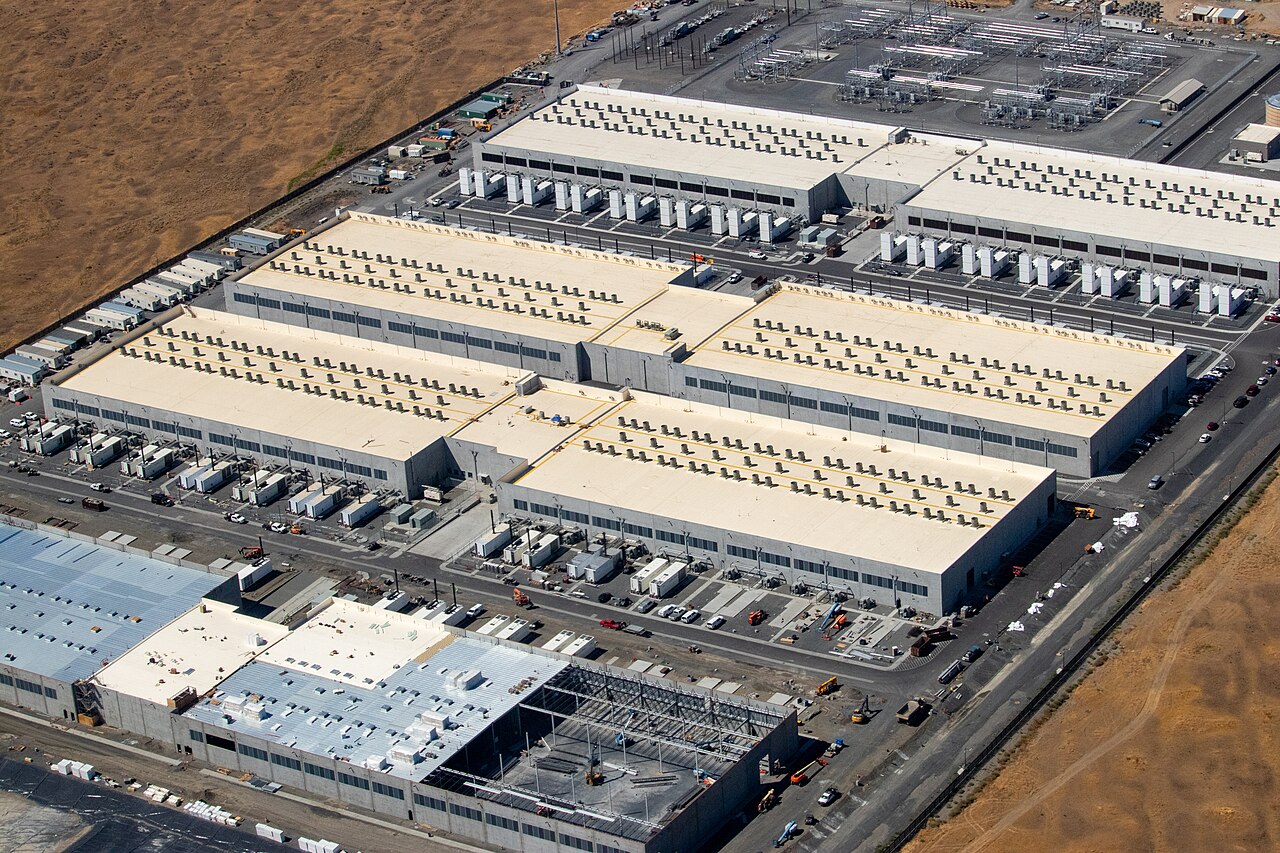
Featured image: Wil Weterings via Wikimedia Commons (Public domain)