










Epic Games AI first is no longer just a slogan. The Fortnite maker has reportedly ordered developers on its unannounced Disney shooter to adopt an “AI-first” production model — telling them there will be “no more hand-written code” — making Epic one of the first major game companies to attempt building a triple-A title primarily with generative AI.
The news broke on October 12 through a Bloomberg report by Jason Schreier, and CEO Tim Sweeney confirmed the pivot the same day, publicly defending it as the future of how games get made. For an industry already arguing fiercely about AI’s place in creative work, this is the clearest signal yet that the company behind Unreal Engine is going all-in.
What the Bloomberg report says about Epic Games AI first development
According to Bloomberg, developers on the unannounced shooter — a collaboration with Disney featuring characters from both Marvel and Star Wars — were told last week that the project would shift to an AI-first pipeline built around tools such as Anthropic’s Claude. One of the game’s directors told staff in an internal message that all art for the title would be “generated with full AI workflows.”
Progress on the title had been slower than expected, Bloomberg reported, partly because Epic underestimated how many staff it would require. The game had originally been targeting a March 2027 release, but a new date has not been communicated.
The announcement reportedly left some developers stunned on a video call. According to people who spoke to Bloomberg, a few made jokes about how they should handle errors produced by the AI-generated work — asking whether they should simply ask Claude to fix its own mistakes. The plan, as Epic described it, is that humans will manage and guide the AI-generated work rather than produce it by hand.
An Epic spokesperson responded to the report by saying the company is “embracing AI-accelerated development, led by Epic developers who are the visionaries and creative drivers for everything we do.”
The Disney shooter behind the pivot
This is not a side project. The shooter sits inside Epic’s blockbuster collaboration with Disney, which invested $1.5 billion in the Fortnite maker in 2024 to build a multiyear “games and entertainment universe.” A delayed flagship with Marvel and Star Wars characters is about as high-stakes as a game project gets — which is exactly why Epic choosing it as the testbed for AI-first production matters.
Tim Sweeney’s public defense of the AI pivot
Sweeney did not hide from the story. Writing on X on October 12, the Epic CEO described a “huge pivot underway here at Epic, moving developers around to retool for maximum AI acceleration.” He framed it as expansion, not cuts: “The aim isn’t to do the same stuff with fewer people, but to enable everyone here to build MORE and BETTER stuff, and to bring the benefits to all teams using Unreal.”
He added that ramping up AI internally will increase Epic’s ability “to survive the AI revolution, help other developers do the same, and come out on the other end making better code and content faster.”
The timing is sensitive. In September 2023, Epic laid off 830 employees — a decision the company attributed to broader issues like slower growth, not AI. Sweeney’s framing of the pivot as expansion, not cuts, is clearly aimed at that audience.
Why this matters for game developers
Epic is not just a game studio — it is the company behind Unreal Engine, the development software used across much of the industry.
That promise is already visible in the roadmap. In June 2026, Epic announced that Unreal Engine 6 will integrate AI tools to “greatly reduce the tedious work” in game development, with integrations for models such as Claude and Gemini acting as “creativity and productivity multipliers” — letting teams focus on essential creative and technical tasks instead of time-consuming manual ones.
For working developers, the practical takeaway is direct: the most widely used game engine in the world is about to ship with AI code and asset generation baked in. Developers who learn to direct, review, and correct AI-generated output — the “manage and guide” role Epic describes — will be working the way the industry’s biggest tools are designed to be used. Teams still treating AI coding assistants as optional may find themselves behind the curve.
The backlash: why AI in game development stays controversial
The outrage arrived on schedule. Players and artists have pushed back hard against AI-generated game content for years, citing plagiarism concerns and low output quality — the “slop” problem, and the open question of what guardrails Epic has against letting AI mistakes seep into the final product.
Sweeney, notably, has never been shy about his side. He has publicly said it is “really irresponsible” of Steam to require studios to disclose their AI use, and he previously argued that AI could let beloved live-service games “thrive.” This latest pivot is consistent with a long-held belief, not a sudden conversion.
The broader numbers show an industry already well along: according to a PC Gamer survey cited by the Straits Times, more than 85% of game developers in Japan now use AI in their work, compared with 36% in North America. Epic’s move may look less like a gamble and more like catching up to where much of the industry’s talent already is.
What happens next
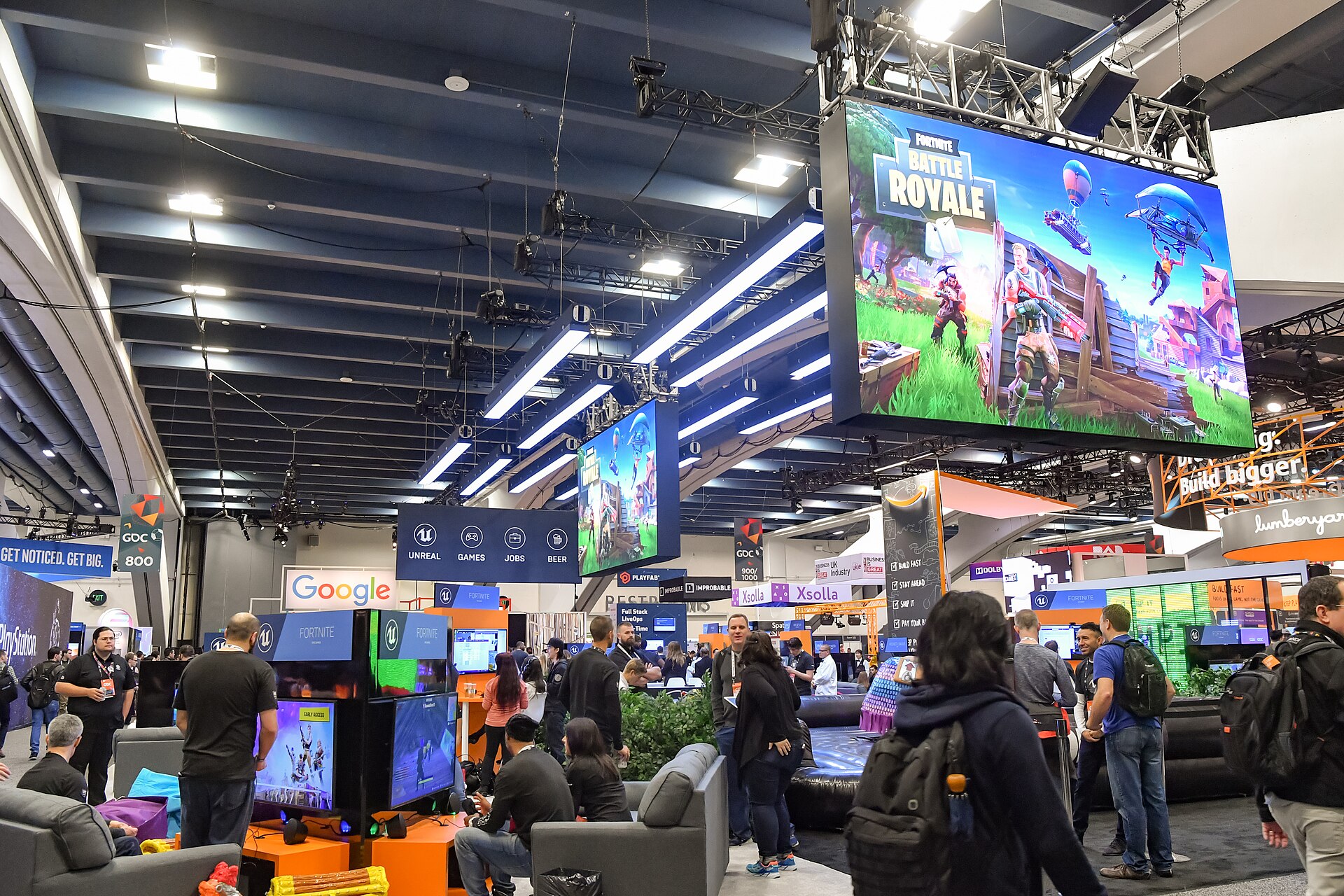
The immediate test is the Disney shooter itself. Bloomberg noted this is the first time a major game company has attempted to develop a title primarily with AI — so the project’s progress, its new release date, and ultimately its quality will be scrutinized as a referendum on AI-first game development.
The longer test is Unreal Engine 6. If AI integrations land as promised, Epic’s internal pivot becomes a product story: every studio licensing Unreal gets a version of the same AI-accelerated pipeline. AI-assisted creative workflows are proving themselves across media — from local AI image generation to frontier agents that manage their own workflows — and games were never going to stay exempt.
Whether developers experience this as empowerment or replacement will depend on what Epic does next with its people. Sweeney has made his bet explicit: more and better, not fewer. The industry will be watching to see if the results match the promise.
Sources: Bloomberg (via VGC and Kotaku), Straits Times/AFP, Nintendo Life. The game is unannounced and details beyond the reporting cited above remain unconfirmed.