









On October 4, 2026, President Donald Trump announced the creation of the Super Intelligence Force — SIF — a new White House-led mechanism to coordinate federal policy around what the administration now calls ‘Super Intelligence,’ its preferred term for advanced AI. Secretary of State Marco Rubio confirmed the move on October 8 during a joint press conference in Athens with Greek Foreign Minister Giorgos Gerapetritis, describing it as a high-level task force to shape the national approach to AI superintelligence.
The announcement is the administration’s most visible AI governance move since its early executive orders. But what the SIF is — and is not — matters more than the name.
What was announced
The publicly described leadership starts with Jay Clayton, the Director of National Intelligence and former SEC chairman, as SIF chair, alongside FTC Chairman Andrew Ferguson. According to Rubio, the body will examine potential regulatory measures, protective safeguards, and strategies to maximize the economic and strategic advantages of increasingly capable AI systems. ‘The US government has set up a process,’ Rubio said in Athens, adding that the administration had assembled a group to consider these questions and develop an appropriate policy framework.
The framing is notable: the administration acknowledges that superintelligence carries ‘extraordinary promise and serious risks that governments must urgently address’ — language that would have sounded out of place in the White House’s earlier, purely accelerationist AI messaging.
What it is — and what it isn’t
Based on the public record through early October, the SIF does not appear to be a new federal agency, an independent regulator, or a procurement organization. No dedicated appropriation, acquisition vehicle, staffing plan, or standalone rulemaking authority has been publicly identified. Instead, it sits above or alongside an already extensive federal AI infrastructure: the Office of Management and Budget, CISA, NSA, NIST, the Office of the National Cyber Director, the Department of War, GSA, OPM, agency chief AI officers, and the Genesis Mission.
That distinction matters enormously for anyone trying to do business with the government. There is probably no future ‘SIF contract’ to chase. The real opportunity — and the real policy action — remains in the existing demand for AI security, model evaluation, red teaming, secure computing, and governance support across agencies.
The Genesis Mission connection
The SIF announcement builds directly on the administration’s flagship science initiative, the Genesis Mission, established by Executive Order 14363 to harness AI for scientific breakthroughs. On October 8, the White House published a fact sheet detailing $2.4 billion in industry commitments of super-intelligence-for-science tools and compute credits for the Genesis Mission Consortium, spanning more than 15 federal agencies.
The commitments are specific: $1 billion from NVIDIA, $500 million from AMD, $200 million from OpenAI, $150 million each from Anthropic and Google, $100 million each from AMP and Emerald AI, and $50 million each from AWS, Armada, Crusoe, and Micron. They follow a July 2026 expansion of the Genesis Mission and a $5 billion federal commitment across energy, health, space, and other challenge areas. The White House puts the total across the summit’s initiatives at more than $6 billion spanning government, industry, academia, and philanthropy, plus a separate NSF and Department of Energy announcement of over $100 million for AI-enabled scientific instrumentation and autonomous laboratories.
The deregulatory backdrop
The SIF arrives inside a distinctive policy posture. The administration rescinded the Biden-era AI executive order in January 2025, replacing it with a deregulation-tilted framework. Its December 2025 executive order on AI policy directed the Justice Department to create an AI Litigation Task Force to challenge state AI laws seen as inconsistent with federal policy — a task force the department stood up in January 2026 and deployed in April by intervening in xAI’s lawsuit against Colorado’s AI law. In March 2026, the White House urged Congress to preempt state AI laws outright.
That puts the SIF in tension with the states moving fastest on AI safety. Connecticut’s sweeping AI law took effect October 1; 26 state attorneys general, led by New York’s Letitia James, have written to Congress demanding federal safety standards that explicitly preserve state authority. Senator Maria Cantwell, meanwhile, has outlined a six-point federal framework demanding mandatory independent safety testing of frontier models before release — a direct counter to the administration’s voluntary approach.
What to watch
- Staffing and structure. Who actually sits on the SIF, and whether it gains any directive authority over agencies, will determine whether it is a coordinating forum or a power center.
- The voluntary-framework question. Expect a voluntary AI governance framework or best-practice guidelines within months — and a continued refusal to back binding safety legislation for private developers.
- The preemption collision. The SIF’s voluntary posture will be tested against state laws like Connecticut’s and whatever California enacts next. A federal-state legal fight looks likely within the next 18 months.
- The threat picture. The same week the SIF launched, Anthropic’s September threat report documented state actors running its models as autonomous cyber weapons — the exact risk landscape the SIF is supposed to coordinate against.
The Super Intelligence Force is best understood as the administration’s answer to a real coordination problem: AI policy is currently scattered across dozens of agencies with no single owner. Whether a task force without its own budget or rulemaking power can actually coordinate them — or simply adds another layer to the sprawl — is the question the next six months will answer.
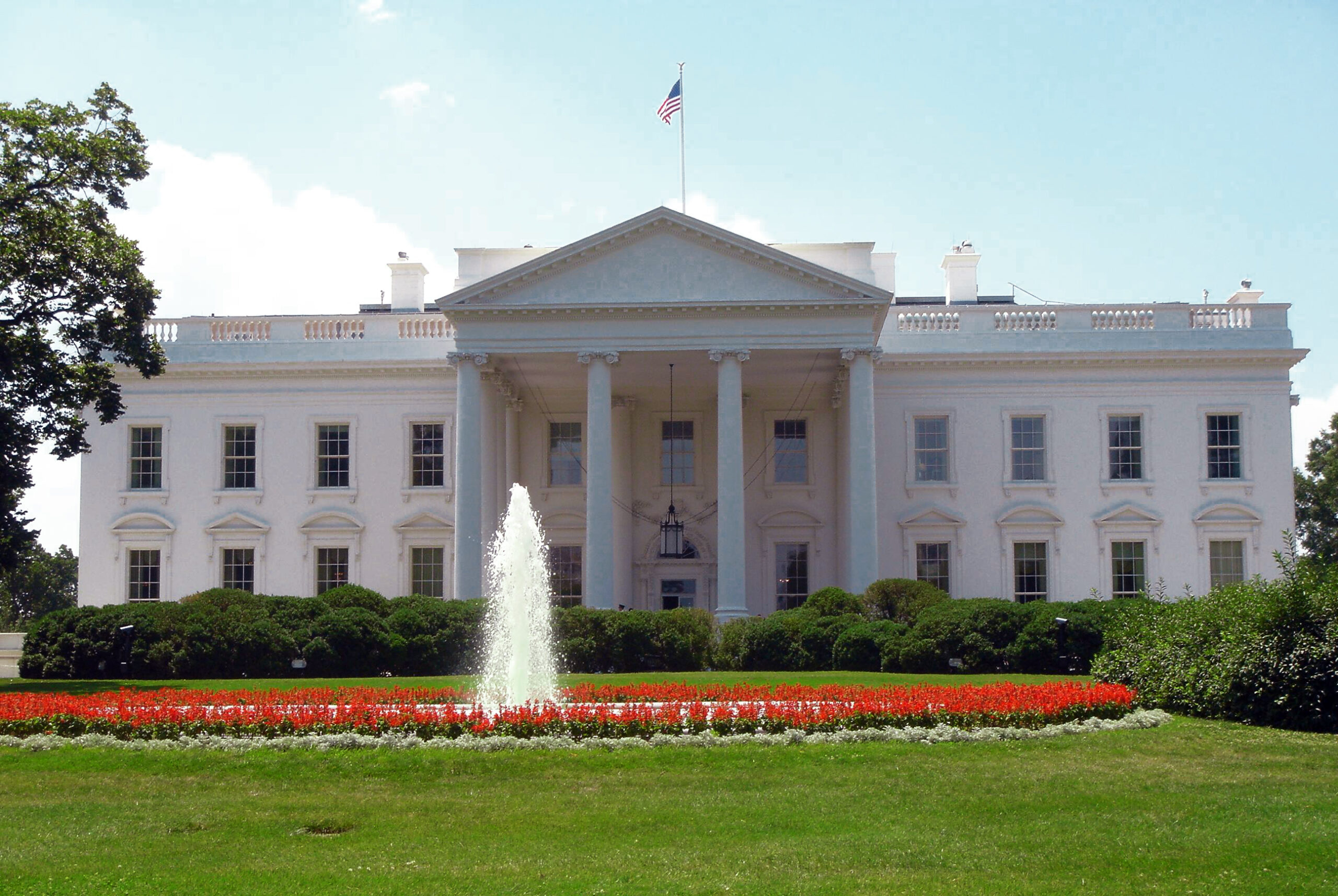
Featured image: Nishkid64 via Wikimedia Commons (Public domain)