









Denmark is preparing to do something no country has tried quite this way: use copyright law to give every person a veto over AI-generated fakes of their own face and voice. On October 8, 2026, the Danish government said it would table legislation aimed at outlawing the distribution of lifelike deepfakes depicting identifiable people without their permission — a proposal that would protect ordinary citizens alongside actors, musicians, and other performers.
If enacted, Denmark would have one of the world’s broadest legal regimes against non-consensual synthetic media, built on a legal foundation — copyright — that makes the right enforceable in a way criminal statutes often are not.
What the bill would do
The planned change to Denmark’s copyright legislation would create a personal right over one’s own likeness and voice as reproduced by AI. In practice, it would prohibit distributing pictures, video, or audio generated or altered with AI so that a person appears to say or do things they never did — without that person’s consent.
The scope is deliberately wide. It covers members of the public, not just celebrities, and it covers synthetic reproductions of performances — so a fake video of a musician ‘performing’ a song they never sang would fall inside the ban. The target is distribution: creating the material privately is one thing, but putting it into circulation is where the law would bite.
Culture Minister Zenia Stampe framed the urgency in practical terms: AI now lets manipulated videos and images be produced in moments and disseminated across social platforms at speed. A central aim of the proposal, she said, is to compel major technology companies to remove altered material swiftly, minimizing the damage it can cause before it spreads.
The carve-outs — and their limits
No deepfake law can survive contact with free expression without exceptions, and Denmark’s proposal includes them: carve-outs for humour, mimicry, exaggerated portrayal, and critiques of authority and society. Satire and parody would remain lawful.
But the exceptions have an exception. They would not extend to falsehoods that create particularly severe threats to other people’s rights, vital concerns, existence, or belongings. A parody that ruins someone’s livelihood or endangers their safety cannot shelter behind the joke defense. The line between protected satire and actionable harm will be where this law is tested — and where its critics will focus.
Where it came from, and where it’s going
The legislation stems from a wide-ranging political deal struck in June 2025 by Jakob Engel-Schmidt, who held the culture minister portfolio in the prior administration, to shield people from unauthorized digital likenesses. The minister expects the measure to come into force at the beginning of 2027.
The copyright-law vehicle is the clever part. Criminal deepfake statutes — like the UK’s new intimate-image offense — require police, prosecutors, and proof beyond reasonable doubt. A rights-based framework works differently: it gives the depicted person a personal, enforceable right, exercisable directly against distributors and platforms, with courts able to order swift removal and de-listing. Belgium is pursuing a related approach with a proposed neighbouring right over image and voice, complete with court-ordered seizure and de-listing powers.
The trade-off is scope creep. Copyright-style rights are transferable, licensable, and potentially perpetual-adjacent — Denmark’s debate will have to decide how long a likeness right lasts after death and whether heirs can wield it. And any system that lets individuals demand takedowns at scale needs safeguards against abuse, or it becomes a censorship tool wearing a privacy costume. The parody and satire carve-outs are supposed to be that safeguard; their wording will be fought over line by line.
The European picture
Denmark is not moving in a vacuum:
- France has already outlawed circulating AI-made pictures or sound featuring a person without consent when the synthetic character of the material is neither evident nor clearly stated, with separate rules banning non-consensual sexual deepfakes regardless of labeling.
- The United Kingdom made generating or soliciting intimate deepfakes without consent a criminal act in England and Wales in February 2026, with distribution carrying up to two years in prison.
- The EU’s directive on violence against women requires member states to criminalize producing and publishing sexually explicit deepfakes without consent where significant harm is likely, with a transposition deadline of June 14, 2027. Denmark, notably, falls outside that directive’s scope because of its opt-out from EU justice and home affairs rules — which is part of why Copenhagen is legislating on its own.
The Danish proposal goes further than all of these by covering any lifelike deepfake of a person’s face or voice distributed without permission — not just sexual or electoral content. If it works, expect other countries to study the copyright mechanism closely. If the satire carve-outs prove unworkable, expect the courts to be the ones who decide what counts as a joke.
The contrast with the United States is sharp. America’s federal deepfake bill — the NO FAKES Act, which would create a federal right of publicity against unauthorized AI replicas — stalled in the Senate in early October 2026 after a free-speech objection, leaving state laws like Maryland’s new deepfake fraud statute and Pennsylvania’s pending nudify-app ban to carry the load. Denmark, with its parliamentary majority deal already struck, may simply get there first.
For the American side of the synthetic-media regulatory wave, see how Connecticut’s newly effective AI law handles disclosure of AI-generated content.
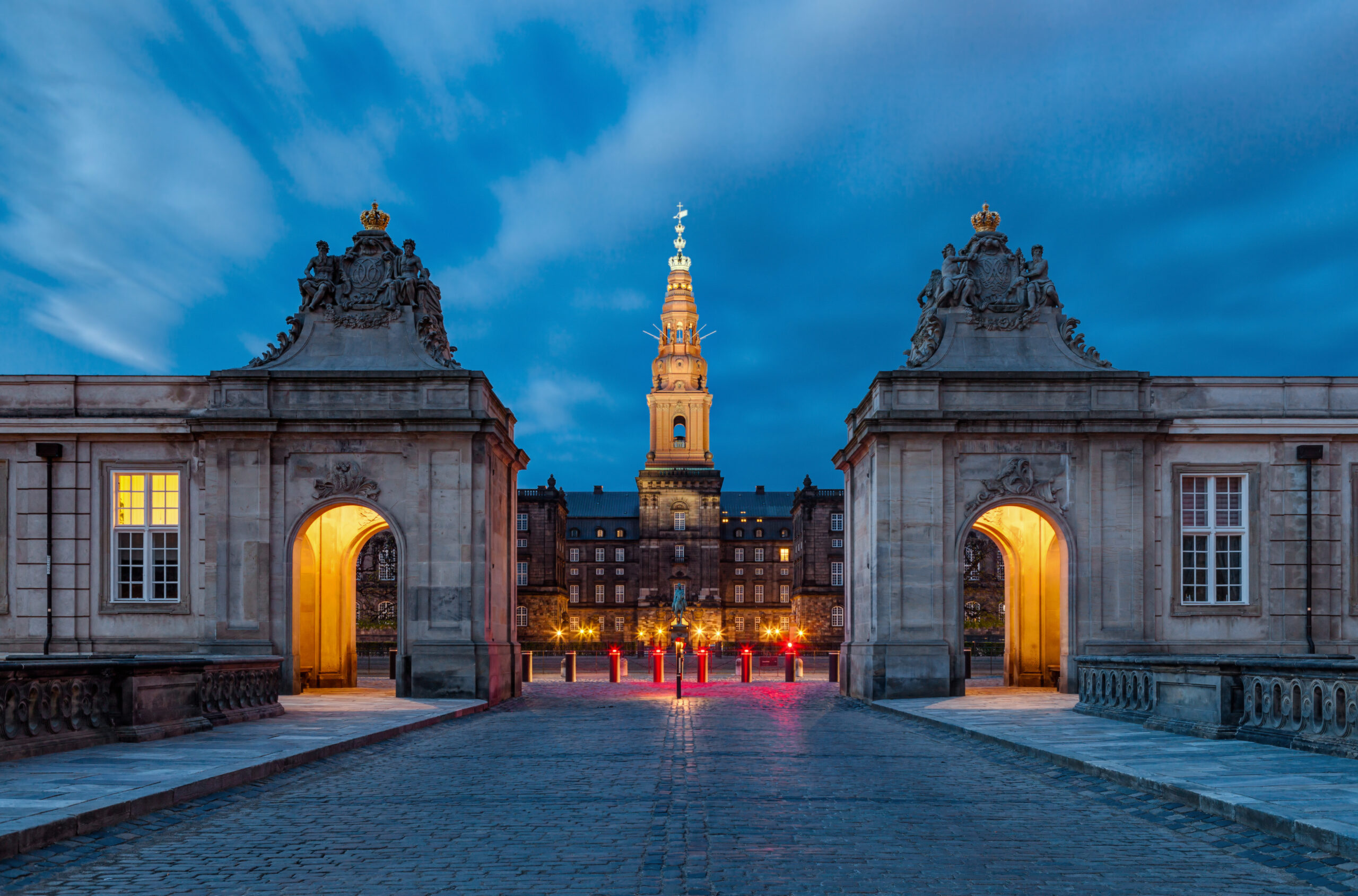
Featured image: Moahim via Wikimedia Commons (CC BY-SA 4.0)