








On August 12, 2026, Alibaba published the open weights for Qwen3.8-Max — the first time a Qwen Max-tier flagship has ever been downloadable. The model is a 2.4-trillion-parameter mixture-of-experts system that activates only about 95 billion parameters per token, with a million-token context window on the hosted API. It briefly topped AI leaderboards and sent Alibaba’s shares up 7% in Hong Kong trading when it was unveiled in early August.
Then people read the license. Qwen3.8-Max is ‘open weights’ in the sense that you can download the files. Whether you can use them the way you expect depends on a bespoke license with revenue thresholds, attribution triggers, and a separate commercial tier. This is the release that forces the open-weights world to stop using ‘open’ as a single word.
The model
Qwen3.8-Max is Alibaba’s largest and most capable model to date: 2.4 trillion total parameters in a mixture-of-experts architecture, roughly 95B active per token. It shipped in BF16 safetensors and fine-grained FP8, documented as compatible with vLLM and SGLang. The hosted API prices it at $2 per million input tokens and $6 per million output.
Context on the scale: domestic rival Moonshot’s Kimi K3, launched in July, is bigger at 2.8 trillion parameters. DeepSeek’s V4 line went generally available on August 13 with the strongest vendor-claimed coding benchmarks of the open cohort. Z.ai shipped GLM-5.3 on August 14 — and the GLM line’s MIT license makes it the most genuinely permissive member of this group. Three frontier-adjacent open releases inside one week, each with a different answer to what ‘open’ means.
The license catch
Qwen3.8-Max does not ship under Apache 2.0 or MIT. It uses a custom ‘qwen3.8-max’ license with thresholds that matter:
- Past 100 million monthly active users or $20 million in monthly revenue, you must display the model name — an attribution tripwire aimed at large-scale deployments.
- Model-as-a-service or AI-assistant businesses above $50 million in trailing revenue need a separate commercial license.
- Internal use is exempt — research labs and enterprises using it behind the firewall are largely unaffected.
This is not an OSI-approved open-source license. It is a commercial instrument with open distribution: Alibaba gets the ecosystem benefits of downloadable weights — fine-tunes, benchmarks, mindshare — while retaining a toll booth on the largest commercial deployments. For startups and researchers, the practical impact is small. For anyone planning to build a scaled product on these weights, the license deserves a lawyer’s afternoon.
The datacenter reality
Three caveats from the release matter more than the parameter count. First, the downloadable weights are text-only — they lack the vision capability of the hosted model. Second, the usable context is well below the 1M tokens advertised for the API. Third, the hardware floor is brutal: the cheapest usable quantization needs around 450GB of combined RAM and VRAM, lossless BF16 is roughly 4.9TB, and Alibaba’s own reference deployment uses 72 Blackwell Ultra GPUs.
‘Open weights’ here means you can download it, not that you can run it. The release that actually matters for most developers is the smaller Qwen3.8-27B sibling — a model that fits in 14–16GB of VRAM at 4-bit and runs on an RTX 4090 — which was reported as delayed at launch.
The benchmarks — vendor-reported
Alibaba’s numbers: 86.6% on TerminalBench 2.1, 67.7 on SWE-bench Pro, 93.0 on PaperBench. None independently verified at publication. The model briefly topped the Artificial Analysis Agentic Index before a methodology update moved it to a near-tie for second place. On DeepSWE 1.1, Alibaba’s figures put it behind Kimi K3 and DeepSeek V4 Pro among open models, and well behind the closed frontier.
Treat every decimal with the usual scepticism. The direction — Chinese labs shipping open weights at a pace Western labs have stopped matching — is not in doubt even if the exact scores compress under independent evaluation.
A spectrum of ‘open’
August 2026 quietly standardized four tiers of openness, and Qwen3.8-Max sits in the second:
- Truly permissive: MIT or Apache 2.0, no strings. GLM-5.2/5.3, Ornith-1.5, DeepSeek’s V4-Flash-Vision weights. Do anything, including compete with the author.
- Commercial-with-download: bespoke licenses with revenue or scale triggers. Qwen3.8-Max is the flagship example — downloadable, but the toll booth activates at scale.
- Geo-restricted: MiniMax H3’s community license excludes the US, EU, UK, and South Korea. Downloadable almost everywhere except where most of the money is.
- API-only: the closed frontier — GPT, Claude, Gemini — where even the weights are a trade secret.
The industry’s vocabulary has not caught up. ‘Open weights’ now describes everything from MIT to geo-fenced, and press coverage routinely blurs the tiers. Alibaba benefits from the blur: Qwen3.8-Max gets filed mentally alongside genuinely permissive releases while carrying commercial terms. Builders should maintain their own taxonomy — and read the license file before the benchmark table.
The takeaway
Qwen3.8-Max is simultaneously a genuine milestone (the first downloadable Max-tier Qwen) and a case study in license engineering. The open-weights ecosystem now spans true permissive licenses (GLM’s MIT, Ornith-1.5’s MIT), bespoke commercial-with-download licenses (this one), and geo-restricted community licenses (MiniMax H3 excludes the US, EU, UK, and South Korea from its applicable territory entirely).
Before you build on any of them, read the license file — not the announcement. And if you do deploy at scale, you’ll need serving infrastructure to match: see what vLLM 0.28 brings for models exactly like this one. In 2026, the license file is part of the model card — treat it that way.
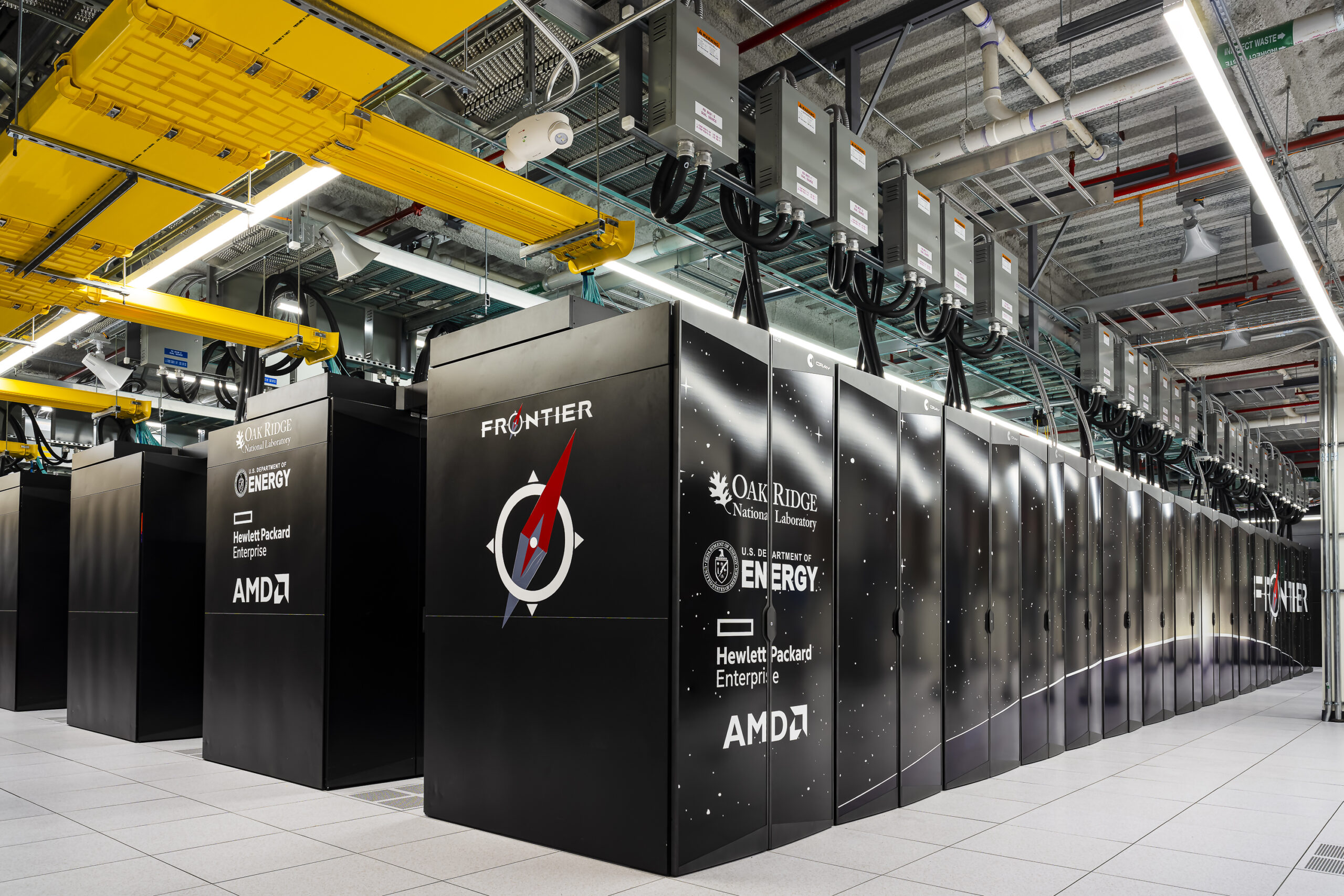
Featured image: Oak Ridge National Laboratory via Wikimedia Commons (CC BY 2.0)