Some of the most valuable knowledge on earth is locked in PDFs. CABI — the international agriculture and environment nonprofit — has spent over a century accumulating plant-health expertise: diagnostic guides, pest datasheets, biocontrol references, and advisory content used by extension workers across the developing world. On October 6, it took the first step toward making that corpus machine-usable, announcing its first AI-ready datasets on Hugging Face.
The release, reported by infotoday.eu, comprises two datasets: “CABI Plant Health Knowledge for AI” and “CABI Palm Weevil Knowledge for AI.” They are the opening move in a larger program, and they are worth attention precisely because agricultural AI has been starved of exactly this kind of grounded, curated, domain-specific data.
What’s in the release
Plant Health Knowledge for AI
The flagship dataset draws on plant-health advisory material from Kenya, Ethiopia, and India — three countries where smallholder farmers face pest and disease pressure with limited access to agronomists. Crucially, the content is multilingual and localised: plant-health advice is only useful if the farmer can read it, in the terms their region uses for the pest eating their crop. For AI purposes, that makes the dataset interesting twice over — as agronomy knowledge and as multilingual domain text, the kind of data that generic web crawls systematically underrepresent.
The choice of countries is itself informative. Kenya, Ethiopia, and India have large smallholder populations, active public extension systems, and pest pressures — from maize lethal necrosis to wheat rust — where timely, correct advice has outsized economic value. They also have linguistic diversity that makes generic AI advice unreliable: a pest’s common name, the recommended product’s local brand, the units farmers actually use. Localised content is not a nice-to-have here; it is the difference between advice taken and advice ignored. For model builders, this is a rare thing: domain text that is both expert-curated and genuinely multilingual, rather than English content machine-translated as an afterthought.
Palm Weevil Knowledge for AI
The second dataset targets a specific, economically brutal pest group. It pulls together CABI’s books, journals, Compendium entries, datasheets, factsheets, and bioprotection product information on palm weevils — the red palm weevil alone causes hundreds of millions of dollars in damage to date palms, coconuts, and ornamentals. Assembling fragmented literature into one structured collection is exactly the unglamorous work that makes retrieval-augmented generation actually work in specialist domains.
The unglamorous problem this solves
Ask anyone who has built RAG for a specialist domain and they will tell you the same story: the model is fine, the retriever is fine, and the corpus is a disaster. Source material lives in PDFs with broken tables, factsheets that contradict each other across years, and taxonomies that changed names twice. “AI-ready” means someone did the janitorial work — normalizing formats, resolving duplicates, chunking so that a retrieved passage actually contains a complete answer. CABI doing that work centrally, once, beats a hundred startups doing it badly in parallel. It is the least exciting and most valuable kind of AI infrastructure.
There is a second-order effect worth naming. Clean, openly available domain datasets are what let small teams compete with labs that have proprietary data moats. A two-person startup in Nairobi can now build a plant-health assistant on the same knowledge base as anyone else. That is the open-data ideal working as advertised — provided the datasets stay maintained, versioned, and genuinely open as they grow.
Why “AI-ready” is doing real work
It is worth pausing on what “AI-ready” means here, because the phrase gets abused. A scanned PDF on a website is not AI-ready. A dataset is AI-ready when it is structured for how models consume knowledge: chunked sensibly, cleaned, consistently formatted, with metadata that lets a retrieval system find the right passage for the right question. CABI’s framing — knowledge “structured for LLMs/RAG” — suggests the organization understands that the bottleneck for agricultural AI is not model size but grounding: connecting a model’s fluent general knowledge to verified, specific, local fact.
The stakes are concrete. An extension worker in Ethiopia with a phone and a RAG-backed assistant grounded in this dataset gets something meaningfully better than a generic chatbot’s best guess about teff rust. The failure mode of ungrounded agricultural advice is not embarrassment — it is a lost harvest. Datasets like these are how you close that gap, and they are a reminder that the agent frameworks racing ahead this month — LangChain’s Deep Agents v0.9, for instance — are only as good as the knowledge their retrieval layers can reach.
The GAIA project, and what’s next
The releases sit inside CABI’s GAIA project, funded by the Gates Foundation and UK International Development — a funding pairing that signals where the intended impact lies: smallholder agriculture in the Global South, not ag-tech demos for investors. CABI says a livestock dataset covering poultry and cattle is expected later in 2026, which would extend the same treatment to animal health.
Practical notes for the curious: the datasets are on Hugging Face now, and CABI lists [email protected] as the contact for questions. As with any first release, expect rough edges — coverage gaps, formatting quirks, the usual v1.0 realities. But the direction is exactly right. The AI industry spent years asking why models hallucinate about specialist domains while the specialist institutions sat on the cure. CABI just started handing it out.
If you work with agricultural AI, the practical move is simple: pull the datasets, test retrieval quality on the questions your users actually ask, and report the gaps back. First releases are shaped by their first users. CABI has done the hard part — deciding the knowledge should be open and structured. What happens next depends on whether the community shows up to use it.
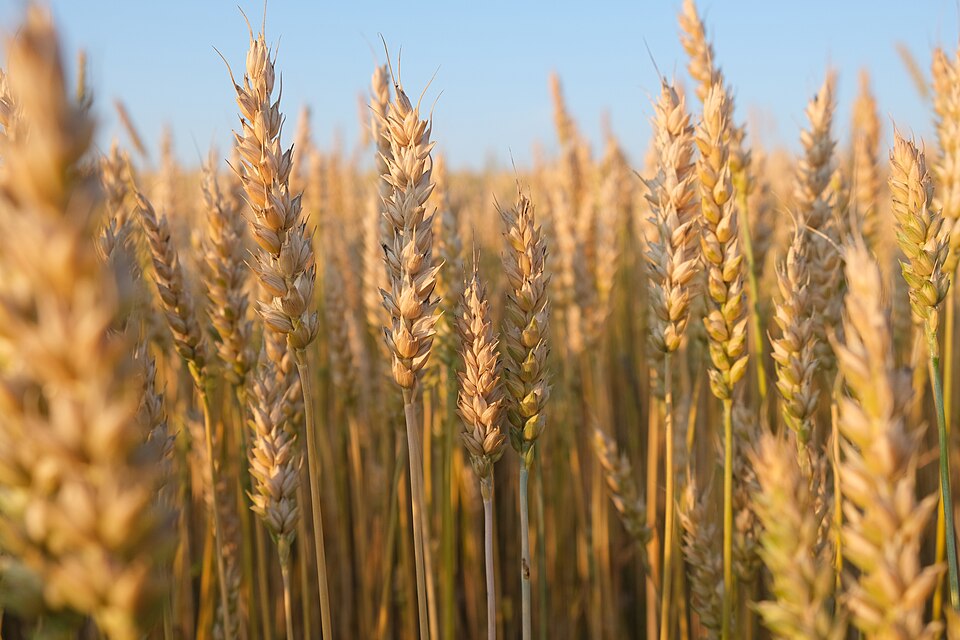
Featured image: a wheat field in Vampula, Finland (Kallerna, via Wikimedia Commons — CC BY-SA 4.0).