Dropout is one of deep learning’s oldest tricks, and large language models mostly abandoned it. The conventional wisdom of the LLM era has been that at sufficient scale, with enough data, dropout — randomly zeroing activations during training — costs more than it helps. A new paper from Cerebras researchers says that wisdom is wrong, or at least incomplete, and brings an unusual amount of evidence: “Don’t Drop Dropout: Optimizing Layer Sparsity for Efficient LLM Training and Inference,” by Mostafa Elhoushi and colleagues, submitted to arXiv (2609.05275) on September 4.
The paper’s claim is specific and strong: layer dropout — also known as stochastic depth, where entire layers rather than individual neurons are randomly skipped during training — belongs in state-of-the-art LLM training recipes. Not as a regularization hack for small models, but as a standard ingredient for large ones, with benefits on both sides of the ledger: cheaper training and faster inference.
For context, stochastic depth is not new — it dates to 2016-era work on very deep ResNets, where randomly dropping whole layers let researchers train networks hundreds of layers deep. What is new is the claim that it belongs in the LLM pretraining recipe at all. The LLM era’s folk wisdom held that scale plus data plus careful optimization had made such tricks obsolete; dropout, in most large runs, was set to zero and forgotten. Elhoushi and colleagues are effectively arguing the field overcorrected — that it threw out a technique whose benefits compound at scale rather than diminishing.
The core claim
Two numbers carry the argument. First, at equal FLOPs, models trained with layer dropout reach lower loss — the training is simply more efficient per unit of compute. Second, at equal training steps, the technique saves up to 25% of training FLOPs to reach the same quality. A quarter of a frontier training run is not a rounding error; at current scale it is tens of millions of dollars of compute. If the result holds up, it rewrites the cost model for pretraining.
The mechanism is intuitive once stated. Skipping layers stochastically forces the network to become robust to missing layers — no single layer can become load-bearing, because any layer might vanish on any given step. The network learns redundant, composable representations. That redundancy is pure regularization during training, but it becomes something more interesting at inference time.
The inference bonus
Here is the elegant part: a model trained to tolerate missing layers can actually have layers removed at inference time. The paper shows this enables a family of efficiency techniques — early exiting (stop computing when confident), layer skipping (bypass layers that contribute little for a given input), and self-speculative decoding (use the model’s own shallow passes as draft predictions) — delivering up to 1.5× inference speedups with negligible accuracy loss. For a hands-on look at a complementary efficiency technique, see our guide to quantizing models with GGUF and AWQ.
That last item deserves emphasis. Speculative decoding usually needs a separate small draft model; here the model drafts for itself, because it was trained to be robust to its own layers going missing. It is a neat example of training-time choices unlocking inference-time options — the same theme driving practical work elsewhere, like TensorFold’s exact speculative decoding engine, which attacks the problem from the serving side. The two approaches are complementary, not competing.
The scale of the evidence
What separates this paper from the usual “we tried it on two models” fare is volume: more than 2,400 experiments, spanning 271 million to 8.2 billion parameters, with training runs up to 160 billion tokens. All pretraining was done on Cerebras CS-3 systems — worth noting, since wafer-scale hardware has different performance characteristics than GPU clusters, and some effects may not transfer one-to-one.
That scale cuts both ways. It is far more evidence than a typical efficiency paper offers. But 8.2B parameters, while serious, is not frontier scale — and the paper’s most ambitious implication is precisely that the technique belongs in frontier recipes.
The pushback
It arrived quickly. An independent audit by yaroslavvb (the gradient-dissent review, published September 9) questions whether the prescription generalizes to frontier LLMs and raises concerns about some of the paper’s mathematical and reporting claims. This is the system working as intended: a strong, well-evidenced claim meets adversarial review within days. The honest summary of where things stand: layer dropout at scale looks genuinely promising, the 25% and 1.5× figures are the authors’ best case on their hardware, and the frontier-scale question is open.
The Cerebras CS-3 detail deserves a moment. Wafer-scale hardware executes workloads differently from GPU clusters — memory bandwidth profiles, communication costs, the works. An efficiency result demonstrated entirely on CS-3 might not transfer cleanly to the H100/B300 clusters where most frontier training happens. That is not a dismissal; it is the standard “your mileage may vary” of systems research. It does mean the most valuable follow-up work is replication on GPU infrastructure, ideally by a team with no stake in the outcome. If the 25% survives that trip, the technique is real. If it shrinks, it is still interesting — just less revolutionary.
Why it matters
Efficiency research has a PR problem — it rarely gets the excitement of a new model drop. But the economics of AI are increasingly the economics of FLOPs: who can train the best model per dollar, and serve it cheapest per token. A technique that cuts training cost by up to a quarter and speeds up inference by half, if it survives contact with independent replication, is worth more than most architecture papers. Builders looking to put those inference gains into practice can start with our vLLM setup and benchmarking guide. “Don’t drop dropout” might end up as one of those titles people quote back at the field for years — or as a cautionary tale about extrapolating from 8B to 800B. Either way, the 2,400 experiments demand an answer, and the replication attempts are already the most interesting work in efficient training right now.
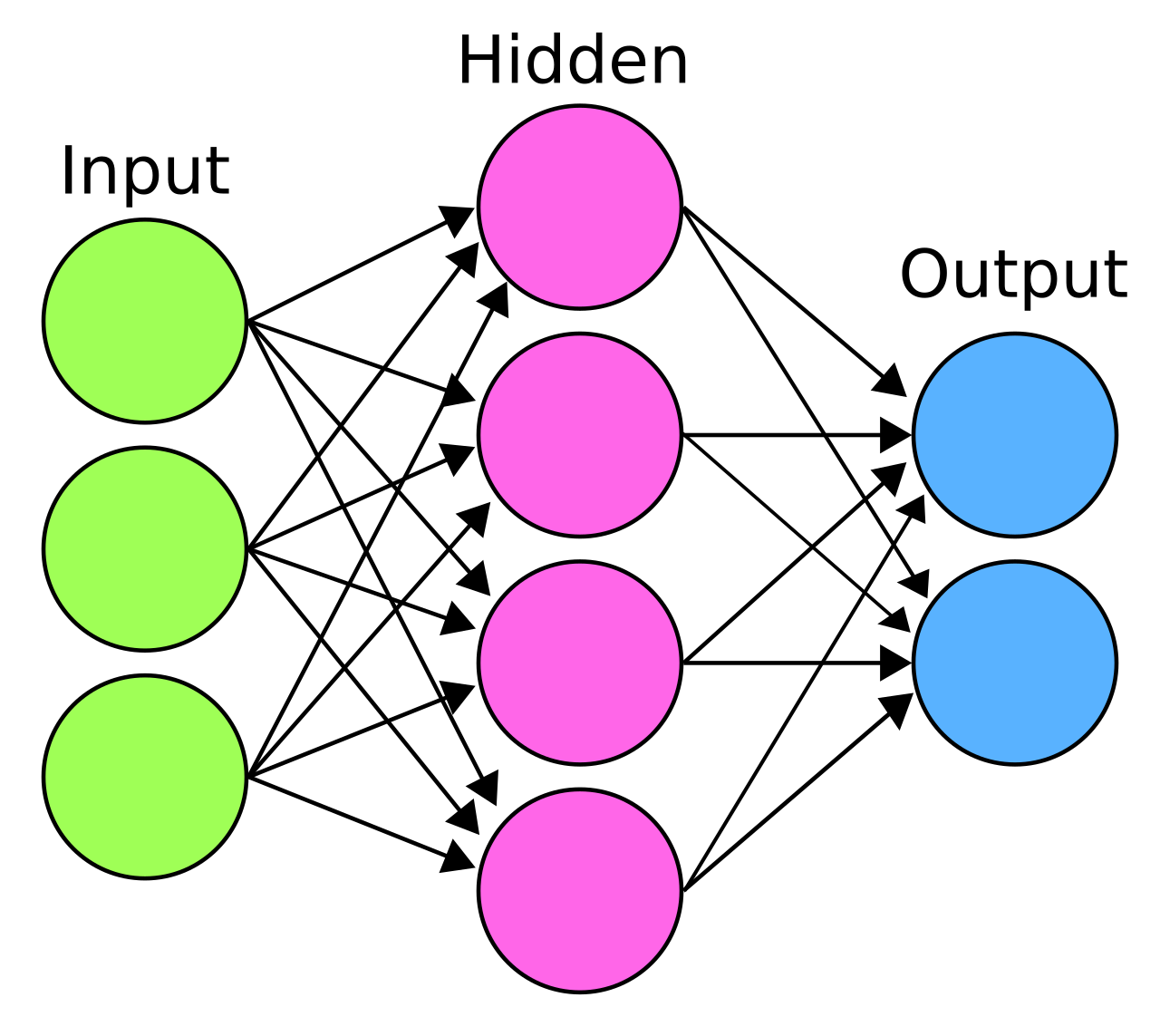
Featured image: a diagram of an artificial neural network with colored layers (Phlsph7, via Wikimedia Commons — CC BY-SA 3.0).