September 2026 will be remembered as the month every major AI lab shipped at once. OpenAI released GPT-6 Astra on the 3rd, Anthropic countered with Claude Fable 5.1 and Opus 5.5, Google itself pushed out Gemini 3.8 Flash on the 2nd — and then, on September 30, Google closed out the month with one more announcement: Gemini 4 Argon, which the company calls its newest and most formidable system.
Koray Kavukcuoglu, senior vice president of Google DeepMind and Google’s chief AI architect, put it bluntly in the launch announcement: “Argon is fundamentally changing the way we work and build at Google.” That is the kind of line executives attach to models they expect to carry the product line for a while. So what is Argon actually bringing to the table?
Longer answers for longer jobs
The headline upgrade Google is leading with is output length. Argon produces dramatically longer answers than its predecessors, and Google is pitching it specifically at sprawling jobs: reviewing an entire codebase, digesting a long contract, or working through a research corpus in a single pass.
This is a response to a real bottleneck. Frontier models have spent two years getting better at reasoning, tool use, and agentic workflows, but many of them still tap out awkwardly on very long generations — drifting, repeating themselves, or losing the thread. A model that can sustain a coherent, detailed response across tens of thousands of tokens changes which tasks you can hand it without babysitting. For engineering teams, the difference between a model that summarizes a repository and one that can walk through the whole thing file by file is the difference between a demo and a tool.
Google has not published exact output limits or benchmark tables in the announcement materials circulating so far, so treat the capability claims as the company’s own until independent evaluations land. One reported data point: on AutomationBench, a business-task completion test, Gemini 4 Argon is reported at 77.5 points against 69.5 for Claude Opus 5.5 and 59.9 for Mistral’s Large 4. Those figures come from vendor-adjacent reporting, not an independent audit — useful as a signal, not a verdict.
Cybersecurity gets the front of the line
The more unusual part of the Argon launch is the rollout order. Vetted cybersecurity teams get first access, because Argon excels at uncovering weaknesses hidden in software. Paying developers and Google AI Ultra subscribers come next.
Putting security researchers first is a deliberate echo of how the industry now handles dual-use capability. A model that is genuinely good at finding software vulnerabilities is also, by definition, good at finding them for the wrong reasons. Google’s September 2 release of Gemini 3.8 Flash came with a restricted sibling — Gemini 3.8 Flash Cyber — available only to vetted teams, and Argon extends that pattern to the flagship tier. Anthropic did something similar on September 1, launching the restricted Claude Mythos 5.1 alongside the public Fable 5.1.
Why the gated rollout matters
Staged access is becoming the standard playbook for frontier releases. OpenAI’s GPT-6 Astra launched September 3 with what one guide described as “critical cyber safeguards” and a phased rollout; on ChatGPT Enterprise, the new model was off by default at launch. The industry has converged on a norm: the most capable version exists behind a vetting wall first, and general availability follows once the safety case is documented. Argon is the clearest example yet of that norm being applied from day one rather than retrofitted.
Where Argon sits in the September pile-up
Context helps. Here is what the last four weeks looked like:
- September 1: Anthropic’s Claude Fable 5.1 (public) and Mythos 5.1 (restricted).
- September 2: Google’s Gemini 3.8 Flash and Flash Cyber; Meta’s Muse Spark 1.3 update.
- September 3: OpenAI’s GPT-6 Astra, its Fable competitor.
- September 10: DeepSeek’s V4.1 Flash, an open-weights efficiency play.
- September 21–22: Grok 4.7, GPT-6 Sol and Luna, Claude Opus 5.5, Xiaomi’s MiMo-V2.6.
- September 30: Gemini 4 Argon.
On the independent Artificial Analysis index, Astra and Claude Fable 5.1 were recently level at 53 points, with Claude Opus 5.5 sitting above both. Independent developer Simon Willison, writing on launch day, called Astra “clearly OpenAI’s Fable competitor” while noting that its benchmark leads were self-reported. Argon enters this scrum with Google’s full distribution behind it — the Gemini app, Search, Workspace, and Cloud — which is an advantage no benchmark captures.
The pricing and API details for Argon are still emerging. What is confirmed: it will reach paying developers and Google AI Ultra subscribers after the cybersecurity vetting wave. Expect the usual questions — per-token pricing, rate limits, context window size — to be answered in the developer documentation as the rollout widens.
What to watch next
Three things will determine whether Argon is a genuine step forward or just September’s shiniest press release. First, independent benchmark scores: Artificial Analysis, LMArena’s human-preference votes, and coding-specific tests will tell us where Argon actually lands relative to Opus 5.5 and Astra. Second, the long-output claim needs stress-testing by real users — sustained coherence is easy to demo and hard to deliver. Third, the cybersecurity gating: how Google defines “vetted,” and whether the restricted tier stays meaningfully ahead of the public one, will shape how enterprises think about deploying it.
September’s launch frenzy made one thing clear: the frontier is crowded, and no lab holds a comfortable lead anymore. Argon is Google’s bet that the next differentiator is not raw reasoning scores but stamina — models that can stay sharp across very long jobs — combined with the distribution to put them in front of billions of users. Whether that bet pays off will be decided in the evaluations and the usage data, not the announcement. For the open-weights side of the same race, see our breakdown of DeepSeek V4.1 Flash, and for how leaderboards are starting to grade models on truthfulness rather than charm, read about LMArena’s factuality shake-up.
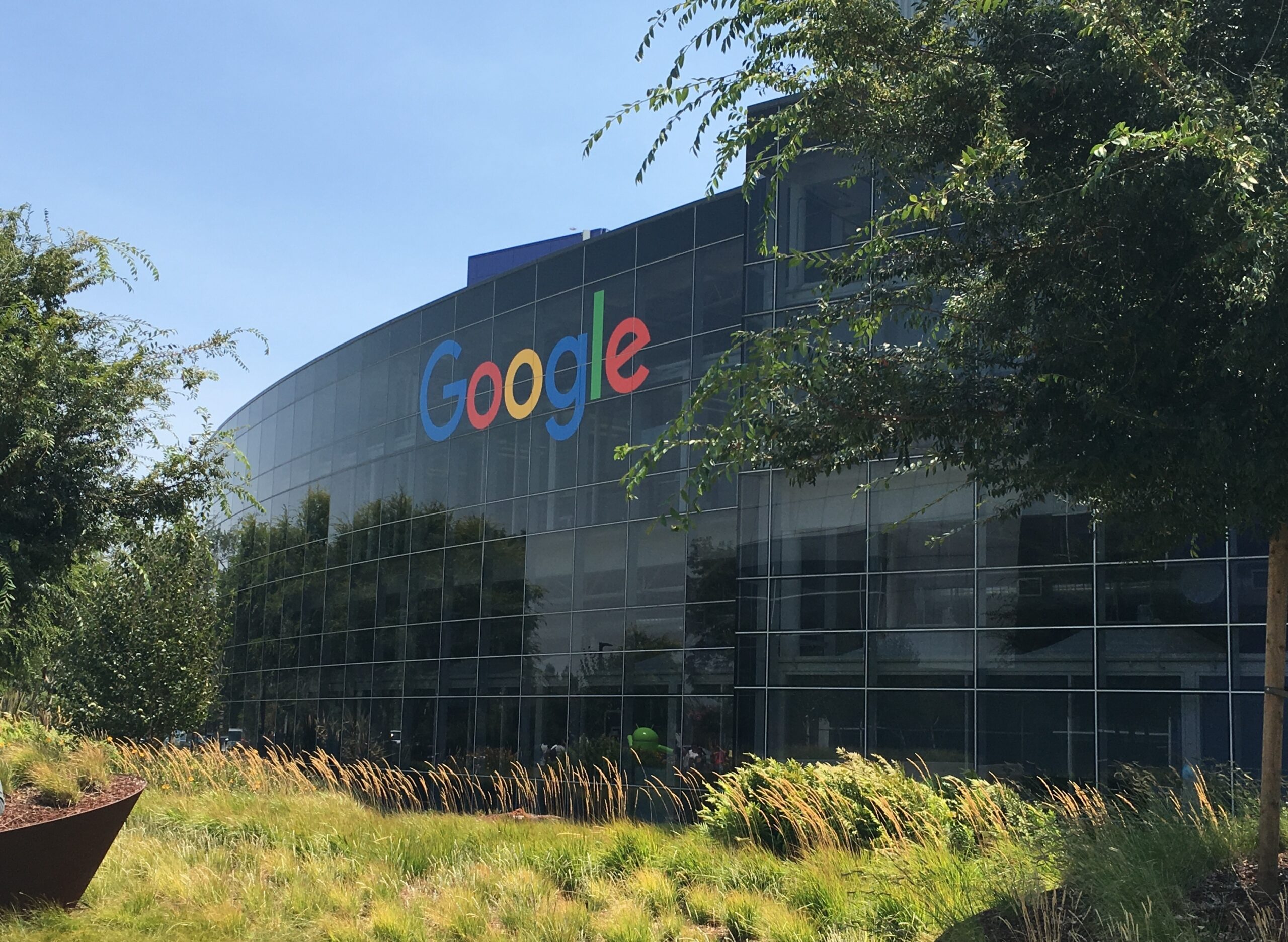
Featured image: Asoundd via Wikimedia Commons (CC BY-SA 4.0)